
Winter is tough on windshield wipers. Rain, snow, ice, and dirt push them harder than any other season — and that’s when problems show up. Let’s look at 4 common winter wiper issues and how to avoid them.
Winter weather puts extra stress on every vehicle component, but few are affected as quickly — or as noticeably — as windshield wipers. Rain, snow, frost, slush, and road contaminants all challenge wiper performance, often exposing issues that may not appear during milder seasons.
Below are some of the most common winter wiper problems, along with practical ways to avoid them.
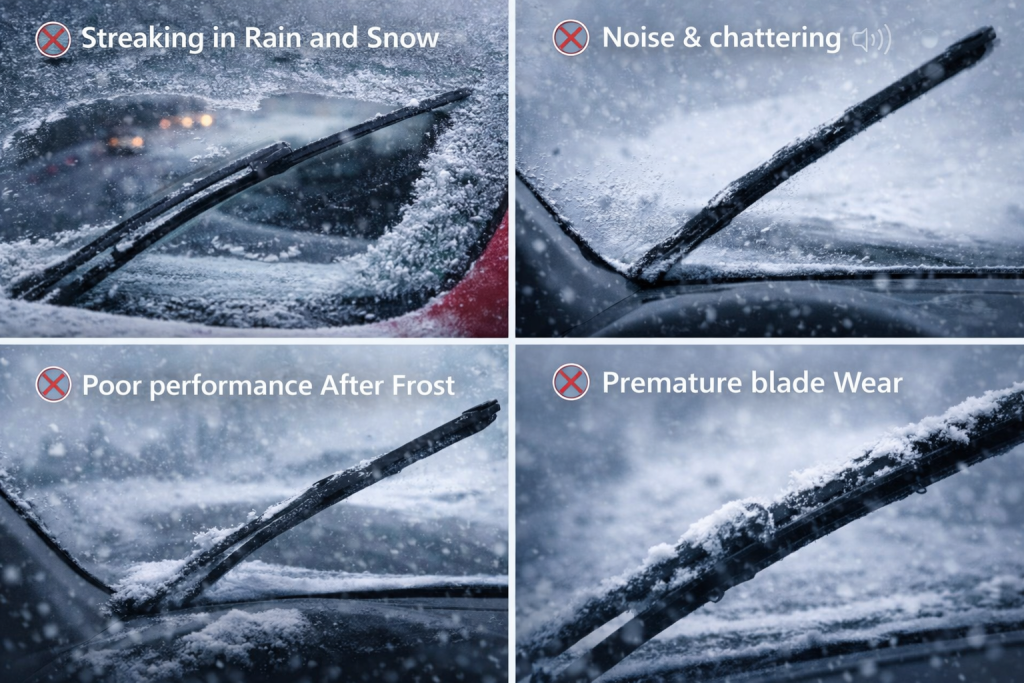
Streaks on the windshield are one of the most frequent winter complaints. Snow mixed with dust, salt, and road grime creates thicker residue that standard wiping alone may struggle to remove.
How to avoid it:
In low temperatures, some wiper blades lose flexibility, leading to uneven contact with the glass. This often results in chattering, skipping, or audible noise during operation.
How to avoid it:
After overnight frost, wipers may appear functional but fail to clean the windshield effectively. This is often caused by micro-damage to the blade edge from dry wiping over ice or hardened residue.
How to avoid it:
Cold temperatures, de-icing chemicals, and abrasive road debris can significantly accelerate blade wear during winter. Blades that perform well in summer may deteriorate much faster in cold conditions.
How to avoid it:
Winter conditions quickly reveal the limits of wiper blade performance. Understanding common winter-related issues — and addressing them early — can greatly improve visibility, driving comfort, and overall safety.
Clear visibility is not a luxury in winter driving; it is a necessity.

Stay informed, stay inspired with our new blogs.

Cleanbro highlights from Automechanika Frankfurt 2026, featuring silicone wipers, live demos, and car care products.
Learn More
Cleanbro will attend Automechanika Frankfurt 2026, presenting its latest silicone wipers, multi-fit systems, and patented wiper solutions. Discover how Cleanbro continues to drive innovation and expand global automotive aftermarket partnerships.
Learn More
Cleanbro will exhibit at Automechanika Frankfurt 2026 from September 8–12. Visit us at Hall 3.1, Booth F68 to discover silicone coating wiper blades, multi-fit solutions and OEM opportunities.
Learn More
For distributors and auto parts importers, choosing between silicone and rubber wiper blades is not only about product performance. It also affects pricing, customer satisfaction and market positioning.
Learn More
Choosing the right wiper blade manufacturer is not only about price. For distributors, importers and private-label brands, product quality, vehicle coverage, OEM capability and stable supply can directly affect customer satisfaction and long-term profitability. Here are five important factors to check before choosing a supplier.
Learn More
Check common Honda wiper blade sizes for the Accord, Civic, CR-V, HR-V, Fit and Odyssey. Learn how to choose the correct replacement and discover Cleanbro silicone wiper blades with water-repellent performance.
Learn MoreIf you are interested in any of our products or would like to discuss a customized order, Please feel free to contact us.
Free Samples available before bulk order
