
Winter is tough on windshield wipers. Rain, snow, ice, and dirt push them harder than any other season — and that’s when problems show up. Let’s look at 4 common winter wiper issues and how to avoid them.
Winter weather puts extra stress on every vehicle component, but few are affected as quickly — or as noticeably — as windshield wipers. Rain, snow, frost, slush, and road contaminants all challenge wiper performance, often exposing issues that may not appear during milder seasons.
Below are some of the most common winter wiper problems, along with practical ways to avoid them.
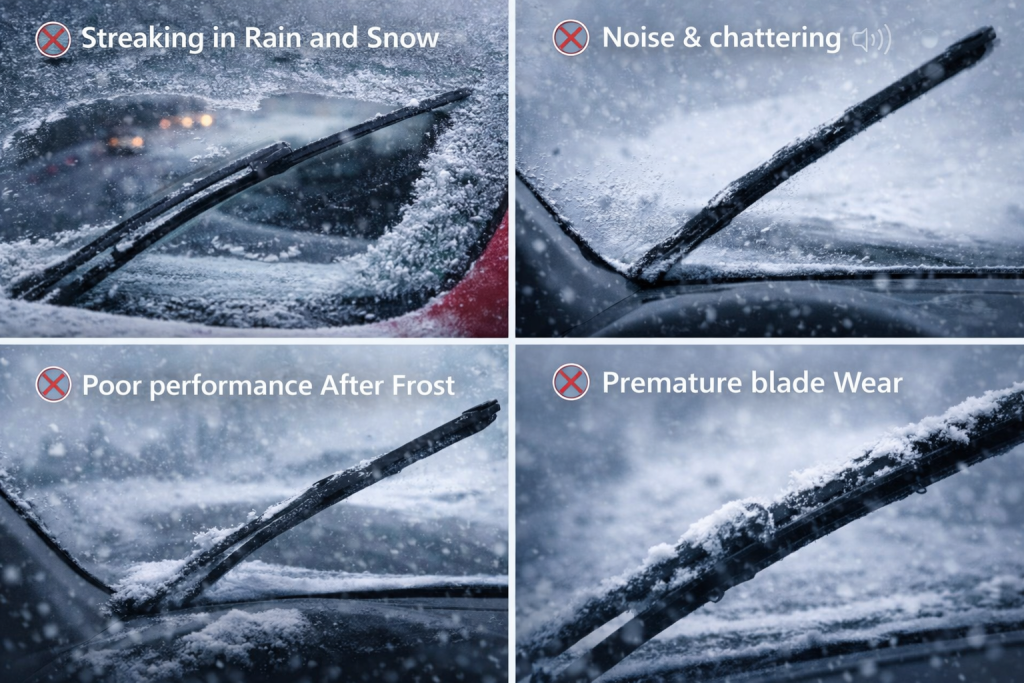
Streaks on the windshield are one of the most frequent winter complaints. Snow mixed with dust, salt, and road grime creates thicker residue that standard wiping alone may struggle to remove.
How to avoid it:
In low temperatures, some wiper blades lose flexibility, leading to uneven contact with the glass. This often results in chattering, skipping, or audible noise during operation.
How to avoid it:
After overnight frost, wipers may appear functional but fail to clean the windshield effectively. This is often caused by micro-damage to the blade edge from dry wiping over ice or hardened residue.
How to avoid it:
Cold temperatures, de-icing chemicals, and abrasive road debris can significantly accelerate blade wear during winter. Blades that perform well in summer may deteriorate much faster in cold conditions.
How to avoid it:
Winter conditions quickly reveal the limits of wiper blade performance. Understanding common winter-related issues — and addressing them early — can greatly improve visibility, driving comfort, and overall safety.
Clear visibility is not a luxury in winter driving; it is a necessity.

Stay informed, stay inspired with our new blogs.

During the rainy season, slippery roads and reduced visibility create greater challenges for driving safety. Many vehicle problems do not occur suddenly — they are often the result of overlooked routine inspections. Performing basic checks in advance can significantly improve driving safety and reduce the risk of unexpected breakdowns. Below is a practical rainy season […]
Learn More
Practical insights from a professional wiper blade manufacturer — designed to help you maintain clear visibility in cold weather.
Learn More
Winter is tough on windshield wipers. Rain, snow, ice, and dirt push them harder than any other season — and that’s when problems show up. Let’s look at 4 common winter wiper issues and how to avoid them.
Learn More
Here are 5 practical tips to help maintain clear vision and safer driving in winter conditions.
Learn More
Silicone coated wiper blades originated in Japan and were first developed for high-performance driving environments such as motorsports. In 1991, Japanese company MITA introduced silicone coating technology into the wiper blade industry. After more than 20 years of continuous refinement and real-world testing, this technology has become a proven solution in the global automotive aftermarket. […]
Learn More
Cleanbro silicone wiper blades are designed with an integrated, replenishable coating system. To achieve consistent water-repellent performance, factors such as windshield condition, coating time, and vehicle age should be taken into consideration. This guide provides technical explanations and solutions to common questions, helping users and professionals maximize product performance. Q1. Why is the coating effect […]
Learn MoreIf you are interested in any of our products or would like to discuss a customized order, Please feel free to contact us.
