
Although wiper blades are consumable parts, they directly affect driving safety in rainy weather. However, many car owners often overlook them in daily use. So, how often should wiper blades be replaced? What signs indicate that they need changing? And what are the differences between different wiper blade materials? This article explains everything clearly. 1. […]
Although wiper blades are consumable parts, they directly affect driving safety in rainy weather. However, many car owners often overlook them in daily use. So, how often should wiper blades be replaced? What signs indicate that they need changing? And what are the differences between different wiper blade materials? This article explains everything clearly.
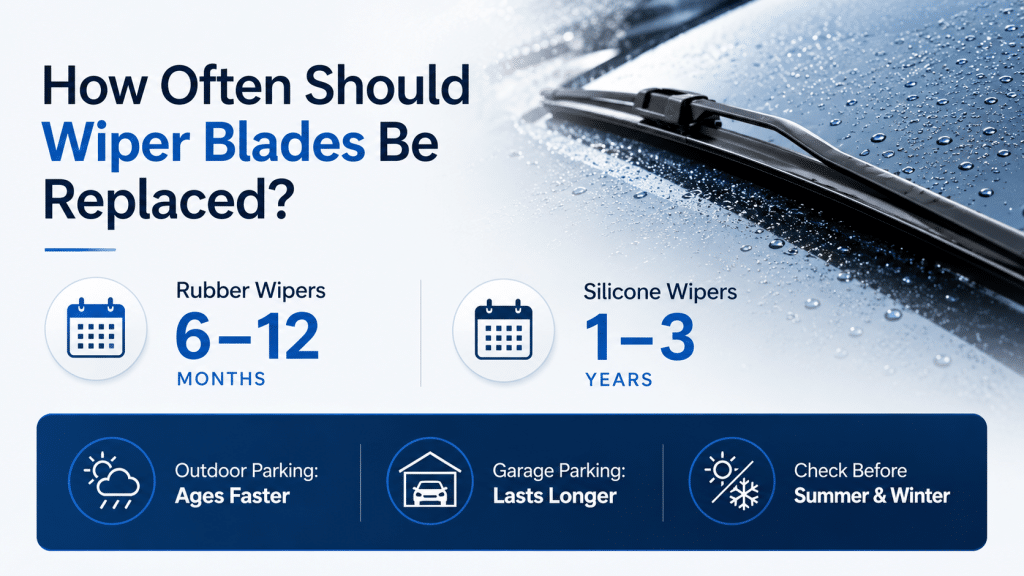
There is no fixed replacement schedule, but the following service life can be used as a reference:
The biggest factor affecting wiper blade lifespan is the parking environment. If a vehicle is exposed to strong sunlight, wind, and rain for a long time, the rubber strip will age faster. If the vehicle is often parked in an underground garage, the wiper blades usually last longer.
It is recommended to check your wiper blades before summer and winter each year, as these two seasons are more likely to accelerate rubber aging.
You don’t need to rely only on time. The actual wiping performance is more important.
1. Water streaks after wiping If curved water marks or fog-like residue remain on the windshield after wiping, it may mean the wiper rubber has deformed or worn out and can no longer fit the glass properly.
2. Noise or juddering If the wipers make squeaking noises or move unevenly across the windshield, the rubber strip may have hardened and lost its elasticity.
3. Visible aging of the rubber strip If the rubber becomes hard, cracked, or leaves black powder when touched, it has likely entered the aging stage.
Once any of these signs appear, it is recommended to replace the wiper blades in time. Don’t wait until heavy rain affects your visibility.
Not necessarily. In many cases, the real problem is oil film on the windshield.
If the front windshield feels greasy, rough, or not smooth to the touch, even a new set of wiper blades may not clean it properly. In this case, it is recommended to remove the oil film from the glass first, and then check whether the wiper blades need to be replaced.
If water streaks, noise, or missed wiping areas still appear after cleaning the windshield, then the problem is most likely with the wiper blades themselves.
It mainly depends on your needs.
If you only need basic wiping performance, prefer a lower price, and don’t mind replacing them more often, standard frameless rubber wiper blades are usually enough for daily driving.
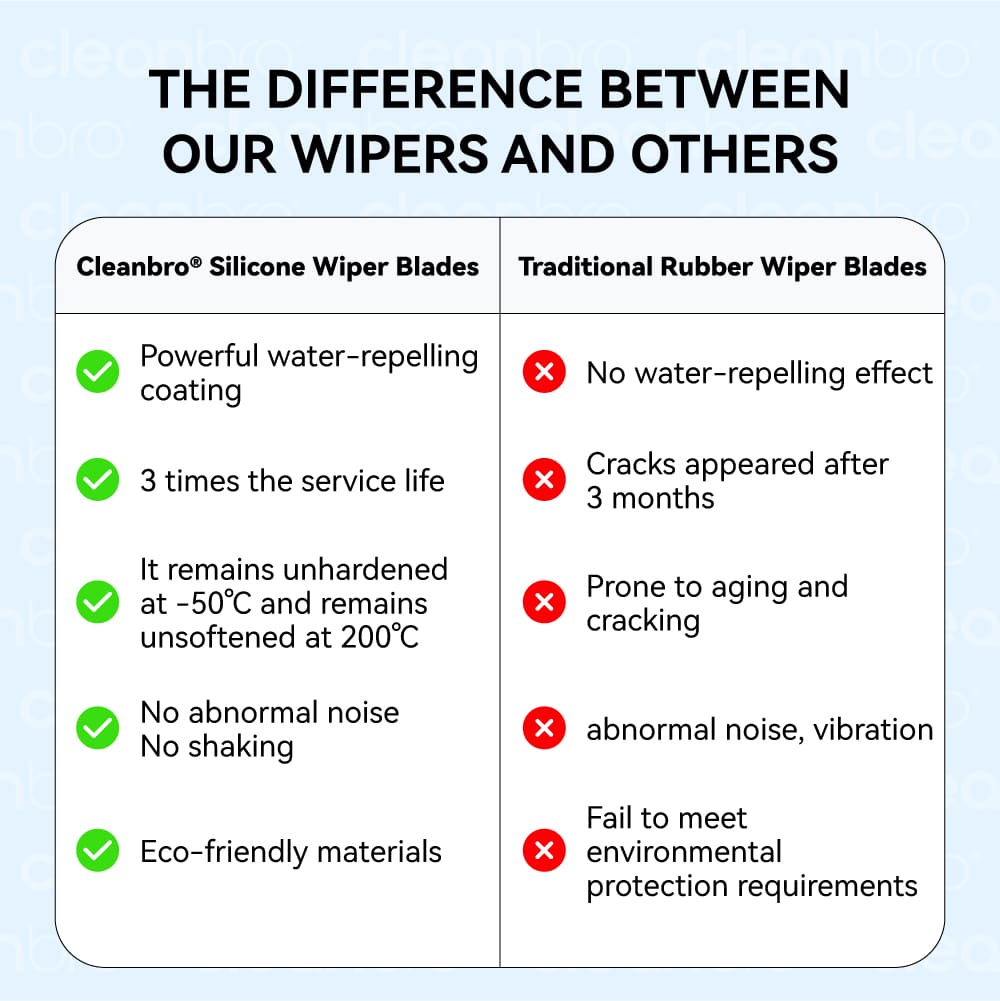
If you want longer service life and better visibility in rainy weather, coated wiper blades are worth considering. During wiping, they help form a hydrophobic layer on the windshield, allowing rainwater to bead up and slide away more easily. This can provide clearer visibility, especially at higher speeds.
Compared with standard rubber wiper blades, silicone coated wiper blades usually offer a longer service life, better resistance to high and low temperatures, and more stable long-term performance.
If your wipers don’t clean well, check the windshield for oil film first, then inspect the condition of the wiper blades.
When choosing new wiper blades, select the material based on your needs. For economical daily use, standard rubber wiper blades are a practical choice. For longer-lasting performance, easier maintenance, and clearer visibility in rainy weather, Cleanbro silicone coated wiper blades are a better option.

Stay informed, stay inspired with our new blogs.

A buyer’s guide to private label silicone wiper blades. Compare suppliers, fitment, custom packaging, samples and order planning with Cleanbro.
Learn More
Why do wiper blade prices vary so much? Compare budget rubber and premium silicone wipers in durability, performance, fitment, and long-term value.
Learn More
Cleanbro successfully concluded Automechanika Frankfurt 2026, showcasing silicone wiper blades, water-repellent coating technology, patented multi-fit adapter systems, and innovative car care solutions to customers and partners from across Europe.
Learn More
Choosing the right wiper blade is about more than brand and price. This guide explains how material, size, wiper arm fitment, climate, and windshield condition affect wiping performance, helping you find the best option for your vehicle.
Learn More
Cleanbro highlights from Automechanika Frankfurt 2026, featuring silicone wipers, live demos, and car care products.
Learn More
Cleanbro will attend Automechanika Frankfurt 2026, presenting its latest silicone wipers, multi-fit systems, and patented wiper solutions. Discover how Cleanbro continues to drive innovation and expand global automotive aftermarket partnerships.
Learn MoreIf you are interested in any of our products or would like to discuss a customized order, Please feel free to contact us.
Free Samples available before bulk order
